Fashion trends refer to the stylistic directions adopted by designers during fashion shows, which are then echoed by ready-to-wear and street style. For the autumn-winter 2026-2027 season, these directions crystallize around a few specific axes: narrowed color palettes, a return of structured silhouettes, and the rise of second-hand as a source of inspiration in its own right.
Second-hand and circular fashion: a concrete source of inspiration
Creating a trendy look no longer solely relies on purchasing new pieces. The French second-hand clothing market grew in volume and value in 2025, according to Refashion’s study. This dynamic changes the way styles spread: a well-chosen vintage piece replaces a new purchase without sacrificing the coherence of a look.
On the regulatory side, the European ban on destroying certain unsold textiles came into effect on July 19, 2026, for large companies. Medium-sized enterprises will be affected starting in 2030. This measure pushes brands towards destocking, reconditioning, and reuse, which directly feeds the supply of accessible pieces in the second-hand market.
The reflex to adopt: look for trendy cuts and materials (structured trench, wide pants, thick knit) in thrift stores or on resale platforms before turning to new items. Inspirations related to fashion on Les Carnets du Web show that this approach naturally integrates into a thoughtful style process.
Colors autumn-winter 2026-2027: the palettes that structure looks
Color is the primary lever to anchor an outfit in the season. This autumn-winter, two chromatic families dominate the runways and trend reports.
Warm and earthy tones
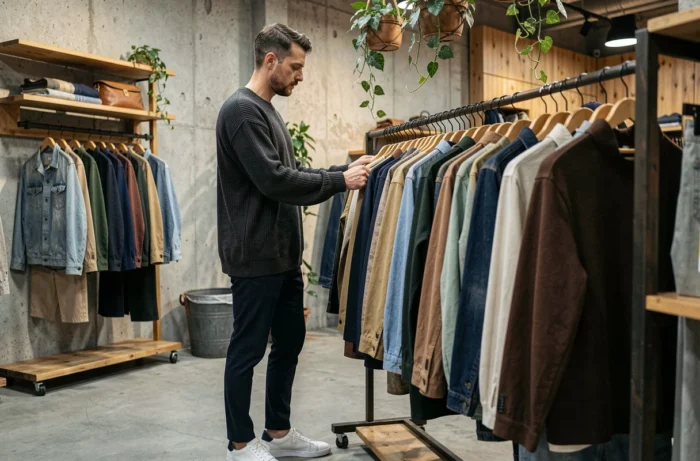
Butter yellow remains a strong marker, already established since spring-summer 2026. It is now worn as a total look on a coat or oversized sweater, but also as a unique touch (scarf, bag) to warm up a neutral base. Chocolate browns, rusts, and beiges support this palette without overwhelming it.
Red as an accent
A touch of red on a leopard or monochrome look is one of the most referenced codes this season. The principle is simple: limit red to a single accessory or piece to avoid a costume effect. A bag, a belt, or a pair of ankle boots is sufficient.
- Butter yellow as a main piece (coat, sweater) or as an accessory to break a dark look
- Browns and beiges as a neutral base on which to place a strong color
- Red as a unique accent, paired with animal prints or black
- Bordeaux and plum for those who want a compromise between bright red and autumnal tones
Silhouettes and key pieces: wide pants, short trench, and structured knitwear
The cutting trends for this season can be summed up in one word: controlled volume. The garment is loose, but the silhouette remains readable thanks to structural points.
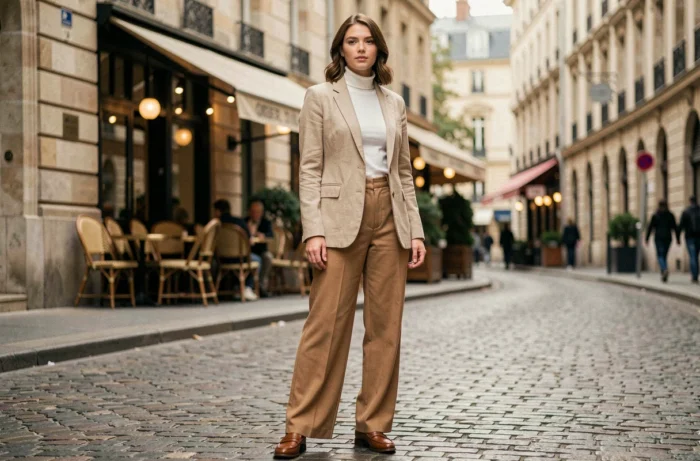
Wide pants (barrel, palazzo, or simply high-waisted straight) continue to replace slim styles in the daily wardrobe. The challenge to wear them without a “pajama” effect lies in the high/low balance: a fitted or semi-fitted top (turtleneck, bodysuit, tucked-in shirt) compensates for the volume below.
The short trench, which appeared on the spring-summer 2026 runways, extends into autumn with denser materials (blended wool, lined gabardine). Its length above the hip makes it an ally for wide pants and midi skirts.
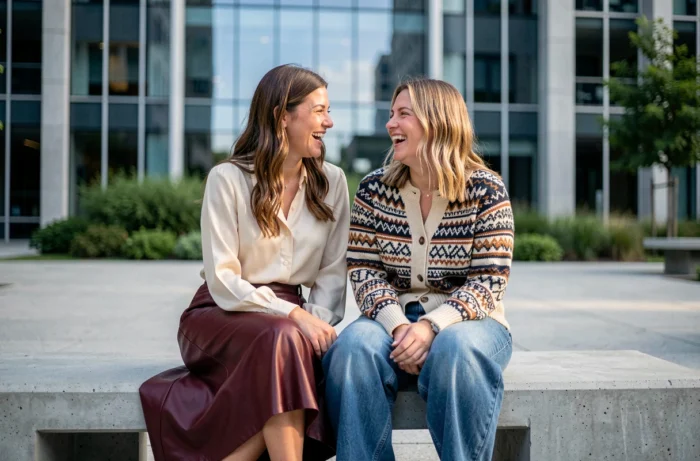
Finally, structured knitwear stands out from oversized, shapeless knit. Wide ribbed sweaters, buttoned cardigans, and thick vests add relief without drowning the silhouette. Knit becomes an architectural piece of the look, not just a warm background.
Leopard print and autumn-winter patterns: how to integrate them without a fashion faux pas
Leopard print returns every season, but its place in current trends is more codified than it seems. The autumn-winter 2026-2027 shows present it as a transitional pattern, meaning a print that connects two solid pieces in a look.
The common mistake: accumulating leopard on multiple pieces (jacket and skirt, for example). The principle that works this season is the opposite. A single leopard piece (midi skirt, coat, scarf) accompanied by muted colors (black, brown, khaki) or a touch of red.
- Limit leopard to one piece per outfit to maintain a clean graphic effect
- Pair the print with solid colors close to the tones of the print (beige, black, brown)
- Avoid leopard on very small accessories (earrings, bracelet) that trivialize the print without exploiting it
The other striking patterns of the season, such as wide stripes and reimagined checks, follow the same logic: one pattern per look, placed on a sober base.
Digital passport for clothing: an evolution that will change shopping habits
The European regulation ESPR provides for the establishment of a digital passport for textile products. The specific requirements for clothing are yet to be defined in a dedicated act, which is expected to be adopted in 2027 with a transition period of at least 18 months.
This system will allow access, via a QR code or NFC chip, to the traceability information of a garment: composition, place of manufacture, recyclability conditions. For consumers attentive to trends and sustainability, this passport will become a concrete selection criterion, on par with cut or color.
The adoption of this standard will also facilitate resale: a garment accompanied by its digital passport can be authenticated and valued more easily in the second-hand market. Traceability and style no longer oppose each other; they converge.
The autumn-winter 2026-2027 season relies on loose yet structured cuts, narrowed color palettes, and an increasing emphasis on circular fashion. The textile digital passport, expected in the coming months, will add a layer of information that could permanently change the way clothing is chosen.