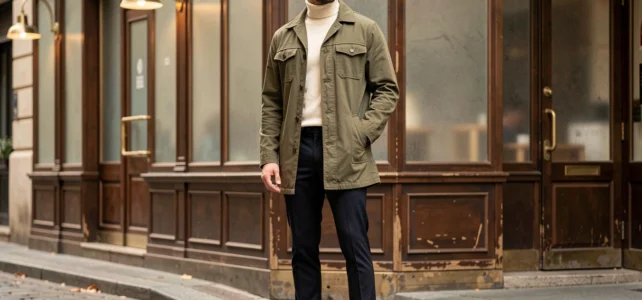
This year’s men’s wardrobe is not just a carousel of silhouettes seen on the runways. Two underlying forces are restructuring the offering: a European regulation that compels brands to rethink their stocks, and a shift among consumers towards fewer but more thoughtful purchases. These two dynamics are significantly altering the lifestyle and men’s fashion trends we observe in stores and online.
ESPR Regulation and the End of Unsold Destruction: What Changes for Men’s Fashion
Since July 19, 2026, Article 25 of the Ecodesign for Sustainable Products (ESPR) regulation prohibits large companies from destroying their unsold clothing, accessories, and shoes within the European Union. Stocks must be resold, donated, recycled, or repurposed.
For the male consumer, the direct consequence is the emergence of “archive” capsules and official outlets from houses that previously did not offer them. Private sales of old stock are multiplying, and several brands are launching their own integrated resale platforms, a segment that now covers both sportswear and tailoring.
Medium-sized companies will only be affected starting in 2030, creating a temporary gap: large houses already display a structured second-hand offering, while mid-sized brands are still selling off their surpluses through traditional channels. This is a point to watch for those following men’s fashion news on monsieur-magazine.fr, as resale prices vary significantly depending on each brand’s policy.
Slim Silhouettes and Tailoring: The Return of Fitted Cuts
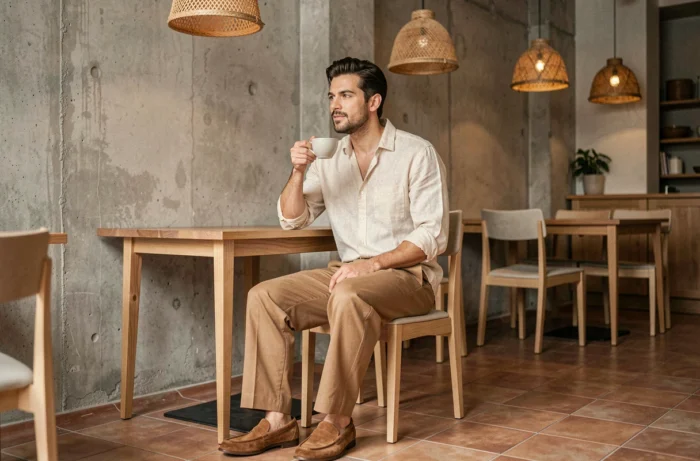
Slim pants are regaining ground after several seasons dominated by oversized volumes. According to data from the Lyst search engine, the demand for slim or skinny jeans and pants for men has increased by 25% month-over-month. Prada confirmed this trajectory by presenting significantly more fitted silhouettes for Spring-Summer 2027.
We recommend not interpreting this trend as a simple regression. The current slim fit is worn with more technical stretch materials and less rigid finishes than the 2010 version. The cuts remain comfortable, and the drape is more natural.
In terms of tailoring, suits are returning in a more casual register. Unlined blazers, pleated trousers worn with sneakers or flip-flops (a strong signal noted in recent Fashion Weeks) blur the line between formal and casual. This year’s men’s style incorporates the suit as a modular piece, not as a uniform.
Colors, Materials, and Key Pieces of the Men’s Wardrobe This Year
Bright pink is establishing itself as the color of the season. It is not a subtle accent: it is worn in a total look or on strong pieces (oversized shirt, shorts, sneakers). Camouflage is resurfacing in a streetwear context, often featured on lightweight jackets and accessories.
Key Pieces to Consider for a Cohesive Wardrobe
- A pair of raw or slightly faded slim jeans, replacing wide-leg as the pivot piece of the daily look.
- A pair of Vans or low sneakers with a vulcanized sole, whose demand is clearly rebounding after several seasons of decline.
- An unlined blazer in a natural material (linen, textured cotton), capable of working well over a t-shirt or an open-collared shirt.
- A pair of shorts tailored above the knee, worn with flip-flops or flat sandals, a combination that has established itself as a lifestyle code accepted well beyond the beach.
Eco-responsible materials are gaining visibility due to regulatory pressure. Linen, certified organic cotton, and recycled fibers are increasingly appearing in permanent collections, not just in marketing capsules. California and the EU are also advancing on restrictions regarding microfiber pollution, pushing brands to rethink the composition of their synthetic pieces.
Resale and Men’s Lifestyle: A Purchasing Reflex That Has Become Structural
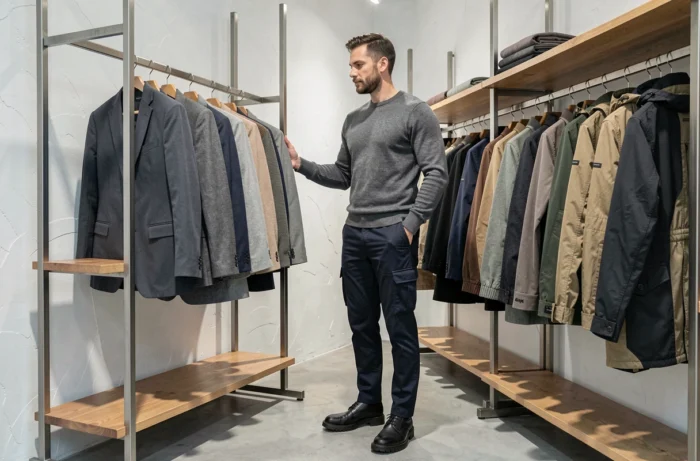
Buying second-hand is no longer a militant gesture reserved for a niche. Brands like Levi’s, Lululemon, or Zara now offer their own resale platforms. What changes in 2026 is that integrated resale within brands becomes a fully-fledged distribution channel, with authenticity guarantees and a purchasing experience identical to new items.
For the menswear market, which is projected to exceed $990 billion by 2034 according to OpenPR, this lifestyle trend is reshuffling the cards. Men who buy resale do not forgo style: they make different choices, prioritizing pieces with high residual value (raw denim, limited sneakers, leather goods).
What This Changes in Building a Look
A wardrobe designed to last alters choices right from the purchase. Favoring timeless basics over ultra-trendy pieces becomes a rational reflex when resale is possible. Raw jeans, navy blazers, white sneakers: these fundamentals of men’s style gain value in an ecosystem where circularity is encouraged by regulations and by the brands themselves.
The men’s fashion market in 2026 is structured around two axes that mutually reinforce each other: more precise cuts worn with less formality, and a purchasing logic where the durability of the garment weighs as much as its aesthetics. Upcoming autumn collections will confirm whether the return of slim fits and the rise of resale are fundamental movements or seasonal adjustments.