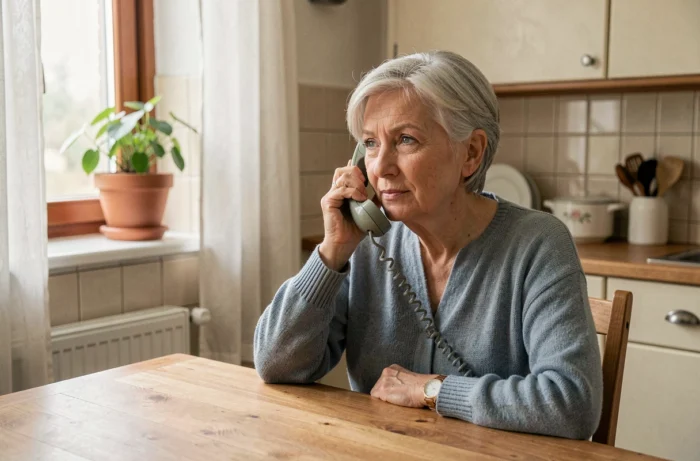
The landscape of support for seniors has shifted since January 1, 2026, with the generalization of home autonomy services (SAD). These structures combine assistance and care under one roof, fundamentally changing how a family identifies and contacts the team capable of addressing their situation. Contacting a dedicated team is no longer about searching for an isolated provider: it is navigating a territorial network where each office covers a specific area.
Gerontological information desk or home autonomy service: who to contact first
The most common confusion lies in the distinction between an information desk and a field operator. A local information point (formerly CLIC in some departments, sometimes renamed “Pôle Info Seniors” or “ESAPS” in Alsace) guides, informs, and helps to compile a file. It does not provide any care or home assistance services.
A SAD, on the other hand, directly coordinates interventions: home helpers, nursing assistants, meal support. Since 2026, these services include a care dimension that previously fell under separate structures (SSIAD, SPASAD). We recommend contacting the local information point first when the request concerns the evaluation of rights (APA, housing assistance, home support), and reaching out to the SAD when a care plan has already been notified and concrete interventions need to be organized.
For families seeking personalized support that covers both advice and connection with professionals, it is possible to learn more about IDEOSENIOR, whose team coordinates orientation and operational follow-up.
Criteria for choosing the right contact channel based on the senior’s situation
The right contact person depends on the level of autonomy and not solely on age. A senior with a GIR 5 or 6 who wants to anticipate housing adjustments does not need the same channel as a person with a GIR 2 coming out of hospitalization. The multi-desk territorial logic requires qualifying the request before picking up the phone.
We observe three recurring scenarios:
- Request for information on rights and assistance (APA, social housing assistance, housing allowance): the CCAS of the municipality or the departmental house of autonomy remains the first point of contact. This desk processes administrative files and can trigger a home evaluation visit.
- Need for an operational aid plan (meal assistance, nursing care, daily support): the local SAD takes over once the GIR evaluation is completed. Orientation can also go through the pension fund for retirees from the general scheme who fall under the prevention of loss of autonomy.
- Situation of crisis or caregiver exhaustion: support and respite platforms offer psychological and logistical support. They are accessible without GIR conditions and without prior files.
A misdirected call prolongs the response time. That is why qualifying the need in advance avoids several weeks of administrative latency.
Home autonomy services: what the reform changes for contacting a support team
Before 2026, a family sometimes had to contact three distinct structures to cover housekeeping, nursing care, and social support. The transition to SAD merges these entries. In practice, a single contact number provides access to coordination that integrates both assistance and care aspects.
This integration has a direct impact on how to contact a dedicated team for senior support. The SAD becomes the central contact once the care plan is validated by the departmental council. It manages the schedule of interveners, ensures follow-up for the individual, and connects with the attending physician.
The role of the SAD coordinator is central. They adjust interventions when the senior’s health status changes, without the family having to restart the entire chain. This point is often underestimated: the quality of the initial contact with the coordinator determines the fluidity of follow-up over several months.
Check the service’s accreditation
Not all former home assistance services have yet completed their transformation into SAD. We recommend checking with the departmental council that the contacted structure is indeed accredited to provide care; otherwise, the family will still need to coordinate a separate assistance provider and SSIAD.
Family caregivers: obtain advice without going through the traditional circuit
The traditional circuit (CCAS, departmental council, pension fund) meets the needs of the senior. The family caregiver, however, has specific needs that these desks do not always cover. The French Caregivers Association offers specific support: listening, orientation, support groups.
Support and respite platforms accept caregivers without conditions related to the GIR of the person being cared for. This point is not well known. An exhausted caregiver does not need to wait for their loved one to be classified as severely dependent to benefit from support.
Another underutilized channel: hospital memory consultations. They are not only for diagnosed patients. A caregiver who notices cognitive issues in a loved one can request an appointment directly, without necessarily going through the attending physician in certain centers.
Coordinating multiple contacts without losing track
A senior with loss of autonomy typically engages several professionals simultaneously. The risk of dispersion is real. The local information point can play a coordinating role by maintaining a single file accessible to the various interveners, but this function depends on the resources allocated by the department.
Keeping a written record of each exchange (date, contact person, decision made) remains the most reliable way to avoid duplicates and omissions. A shared liaison notebook between the family and the SAD structures daily follow-up.
The French territorial network offers real resources, but their effectiveness depends on the ability to identify the right channel from the start. The SAD reform simplifies the operational part. For the information and rights part, the local information point and the CCAS remain the most direct entry points.