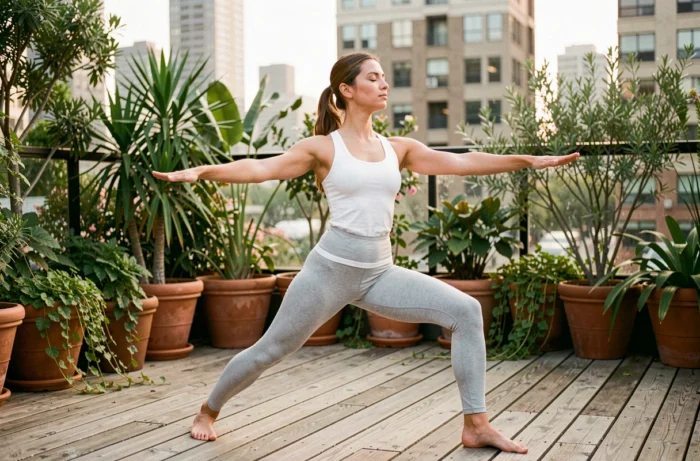
Improving physical well-being on a daily basis is no longer just about planning a workout three times a week. Recent public health recommendations now integrate activity, sedentary behavior, and sleep into a single framework of analysis, over a complete 24-hour day. This shift in perspective changes the way we evaluate our habits and identify the most effective levers.
24-Hour Approach to Physical Well-Being: Activity, Sedentary Behavior, and Sleep Compared
The summaries published in 2026 by health organizations no longer treat exercise in isolation. They present three interrelated dimensions: movement, sitting periods, and nighttime rest. The central idea is that every hour of the day counts, not just those spent training.
| Dimension | Recommended Goal | Main Lever |
|---|---|---|
| Physical Activity | Incorporate movement throughout the day, including light activity | Walking, stairs, active tasks |
| Sedentary Behavior | Frequently interrupt prolonged sitting periods | Regular breaks, posture changes |
| Sleep | Quality prioritized over total duration | Reducing nighttime noise, limiting artificial light |
This table reflects a clear shift. Managing sedentary behavior is now treated as a lever as crucial as exercise itself. Recent publications in preventive cardiology emphasize “move more, sit less,” a phrase that goes beyond simple common sense to become a structuring axis of official recommendations.
Specialized resources available at physio-mag.com allow for a deeper understanding of the mechanisms linking posture, movement, and recovery within a holistic health framework.

Sedentary Behavior and Active Interruptions: What Recent Data Measures
Most articles on physical well-being recommend “doing sports.” Recent data shifts the focus to a less visible parameter: the time spent sitting uninterrupted weighs as much as the lack of exercise.
Hospital and public health content published in 2026 reminds us that all activity counts, even light activity. Climbing stairs, getting up to tidy a room, or walking for a few minutes between meetings contributes to the daily movement tally.
Reducing Screen Time Outside of Work
Recreational screen time, outside of professional obligations, constitutes one of the main blocks of identified sedentary behavior. The recommendations do not aim to eliminate screens but to fragment long periods of inactivity with micro-movements.
- Get up every 30 to 45 minutes for a few minutes of active break, even without leaving home
- Alternate sitting and standing positions when the work environment allows
- Replace some of the passive screen time (series, social media) with light activity like a walk at the end of the day
However, data does not show that a single intensive session compensates for an entire day spent without moving. The regularity of interruptions takes precedence over the intensity of a one-off effort.
Living Environment and Sleep Quality: Underestimated Physical Parameters
Physical well-being does not solely depend on what the body does. It also depends on the environment in which it recovers. Concrete measures related to the living environment appear in recent recommendations, particularly regarding two factors: nighttime noise and artificial light.
Light and Noise: Two Measurable Disruptors
Exposure to artificial light in the evening delays melatonin production and shifts the sleep onset cycle. This mechanism has been documented for a long time, but its integration into global physical well-being recommendations is more recent.
Nighttime noise, even at levels deemed subjectively tolerable, fragments deep sleep phases. Sleep quality deteriorates without the person being aware, which affects muscle recovery and stress regulation.
- Limit sources of blue light (screens, LEDs) in the hour before bedtime
- Use blackout curtains if outside lighting enters the room
- Identify recurring noise sources (traffic, standby devices) and mitigate them with simple solutions (earplugs, repositioning the bed)
These adjustments are more about arrangement than willpower. They require no physical effort, but their impact on recovery and cardiovascular health is documented by research.
Yoga, Walking, Breathwork: What Gentle Practices for the Body Daily
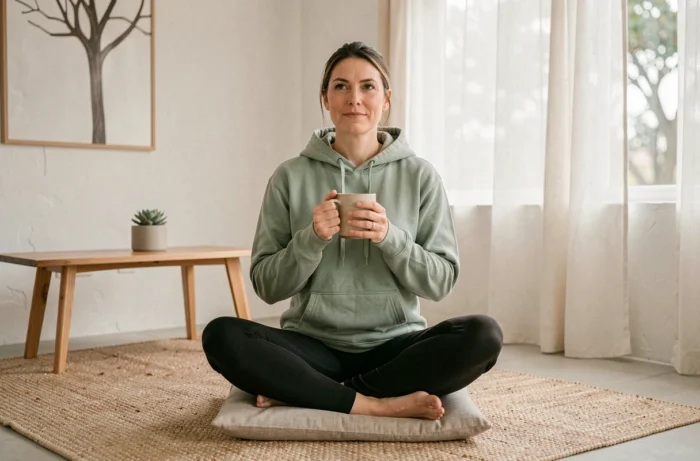
The well-being trends of 2026 confirm the rise of gentler sports practices, halfway between exercise and stress management. Yoga, Pilates, and breathwork are among the most cited disciplines for combining movement and mental health.
Walking remains the most accessible and well-documented practice. It requires no equipment, fits into daily commutes, and produces measurable cardiovascular benefits even at low intensity.
Choosing Based on One’s Living Environment
The choice of a practice depends less on its theoretical virtues than on its compatibility with daily life. A person working from home in an apartment does not have the same options as someone with a garden or living near a park.
The best practice is the one maintained over several weeks, not the one that promises the most spectacular results. The 2026 recommendations emphasize regularity over performance. Ten minutes of daily movement is worth more than an intense session followed by several days of inactivity.
Daily physical well-being is built on three simultaneous axes: reducing prolonged periods of immobility, improving sleep environment, and integrating regular, even light, movement. This triptych of activity-sedentary behavior-sleep replaces the old reflex focused solely on exercise. The most effective adjustments are often the least visible: an active break every 30 minutes, thicker curtains, a walk instead of a drive.